Glamping in Cold Weather: Essential Gear for Cozy Nights
Don't Just Survive: Your Shelter Needs to Earn Its Keep
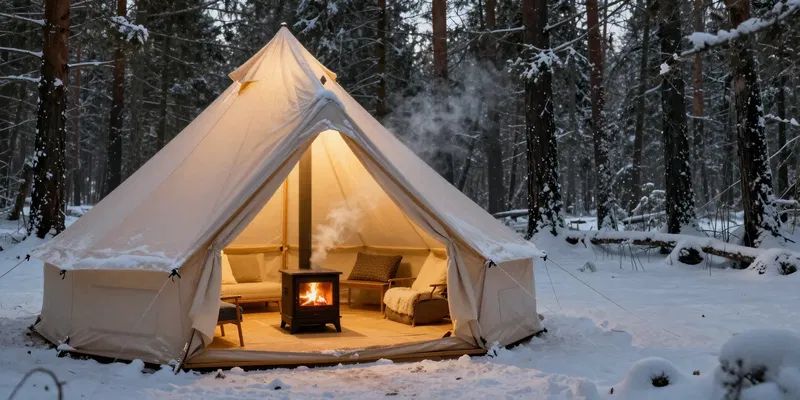
Look, a cheap three-season tent in winter is basically a nylon coffin. It's flimsy, drafty, and will have you questioning your life choices by 2 AM. Here's the thing: your tent or shelter needs to be a fortress. I'm talking heavy-duty canvas bell tents or expedition-grade geodesic domes. They hold heat better, don't flap like crazy in the wind, and give you room to actually *live*. Think of it as your living room. A tiny nylon tube won't cut it. You need space for a proper bed and a heater, and maybe even to stand up and stretch without knocking your tea over.
The Bed Matters More Than You Think (Your Back Agrees)
Forget that thin foam pad from college. The ground is a heat vampire. You need insulation FROM BELOW. A proper insulated sleeping pad with a high R-value is non-negotiable. It's the difference between sleeping and shivering. On top of that, your sleeping bag needs to be rated for at least 10-15 degrees Fahrenheit *lower* than the coldest temp you expect. And for the love of all that is holy, add a fleece or flannel liner. It adds warmth, feels nicer against your skin, and is easier to wash than the bag itself. This is where comfort is built.
Heat That Doesn't Come From Shivering
Body heat alone is a garbage strategy. You need a real, safe heat source. Battery-powered electric blankets are a revelation. Run it for 30 minutes before bed to pre-warm your sleeping bag. It’s bliss. For tent-safe ambient heat, look at portable propane heaters with low-oxygen sensors and automatic tip-over shutoff. They’re not for sleeping with on, but for taking the deep chill out of the air while you're playing cards. And never, ever skip a carbon monoxide detector. It's cheaper than the alternative.
Clothes: Your Personal, Mobile Insulation Layer
Cotton is the enemy. It gets wet, stays wet, and turns you into a popsicle. The name of the game is layers, and they should all be synthetic or wool. Start with a moisture-wicking base layer. Then an insulating mid-layer like a fleece or puffy. Your outer shell should block wind and water. This system lets you add or shed heat as you move. And your extremities? Thick wool socks. Insulated, waterproof boots. A good beanie. Gloves. You lose most of your heat through your head and feet, so cover them up. It's not rocket science, but you'd be shocked how many people get it wrong.
The Cozy Factor: Light, Food, and Mindset
Gear is functional. But glamping is about atmosphere. You need soft, warm light. String up some battery-powered fairy lights or use a dimmable lantern. Harsh headlamps kill the vibe. For food, think one-pot wonders: stews, chili, anything that simmers and fills the tent with amazing smells. A proper thermos for hot drinks is a game-changer. Midnight cocoa without leaving your bag? Yes. Finally, bring a good book, a deck of cards, or a podcast playlist. Sometimes the weather turns, and you'll be tent-bound. Embrace it. That's the whole point—enjoying the coziness *because* it's wild outside.