Glamping in Hot Weather: Cooling Solutions for Your Shelter
The Heat is a Buzzkill. Let's Fix That.
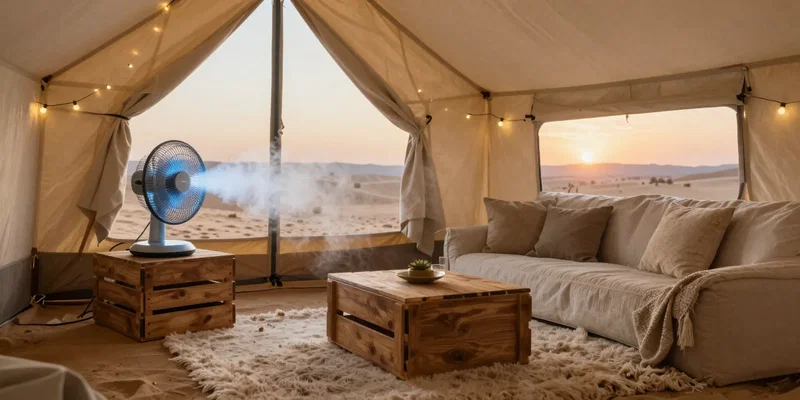
So you planned the perfect summer glamping trip. You've got the fancy tent, the comfy mattress, the little string lights. It's all Instagram-ready. Until you step inside at 2 PM and it feels like a solar oven. That sticky, suffocating heat can ruin the whole vibe in about five seconds flat. But here's the thing: sweating through your linen sheets isn't a mandatory part of the experience. With a bit of smart gear and some old-school tricks, you can turn your shelter from a sauna into a sanctuary. Let's talk about how.
Your First Defense: Picking the Right Spot & Shelter
This isn't hardcore backpacking. You have options. Before you even think about gadgets, get the basics right. Pitch your tent in the shade. Full stop. Morning shade is good, but all-day shade from a big tree is the goal. Next, orient your tent so the door and any windows face the prevailing breeze. You want that air moving through. And please, for the love of all that is cool, get a tent with *massive* mesh panels. Maximum ventilation is non-negotiable. A dark, sealed-up tent is just asking for misery. Think of it as choosing an apartment with good AC—only the AC is the wind.
The Hero Gear: Battery-Powered Fans are Lifesavers
This is the single biggest upgrade you can make. A good camping fan isn't a luxury; it's essential climate control. I'm not talking about a wimpy little USB desk fan. Get a proper one with big blades, multiple speeds, and a strong rechargeable battery. Clip it to your tent pole, aim it at your face, and feel instant relief. Some even have misting functions—spray a little water into the airstream for an evaporative cooling effect. It’s magic. Run it all night. The gentle hum is better than any white noise app. Worth every penny and every ounce in your gear bin.
Create Your Own Shade Fortress
Your tent's rainfly is not a sun shield. Often, it’s a heat trap. The real pro move? A separate sun shade. String up a large tarp or a dedicated sun canopy a foot or two *above* your tent. This creates an air gap—an insulating layer that stops the sun's radiation from ever hitting your tent roof directly. The temperature difference underneath is shocking. It’s like putting a hat on your house. Use reflective silver tarps for maximum effect. This setup turns your entire living area into a cool, shaded porch. It’s a game of inches, and this wins.
Clever Hacks & Low-Tech Coolers
Sometimes the best solutions are stupid simple. Soak a bandana or a dedicated cooling towel in cold water, wring it out, and drape it around your neck. Your body’s core cooling system will thank you. Keep a spray bottle filled with water in your tent—a quick spritz on the face and arms is ridiculously refreshing. If you have a cooler, don't just bury the drinks. Put a sealed bottle of frozen water in front of your fan. You've just built a ghetto AC unit that blows slightly cooler air. At night, consider a battery-operated tent fan that also has a light. Two birds, one stone. Think like a shady bartender, not an engineer.
Nighttime is When You Win the Battle
The day’s heat is stored in the ground and your tent fabric. When the sun drops, you need to purge it. Open every vent, window, and door. If your tent is 90% mesh, roll up the walls completely (behind the bug net, of course). You want to create a wind tunnel. Get that hot, stagnant air out and let the cooler night air flood in. Swap your sleeping bag for a lightweight linen sheet. Maybe even put your top sheet in the cooler for an hour before bed. It sounds extra, but crawling into a cold sheet on a hot night is a feeling of pure victory. This is how you actually get some sleep.